
Cleared Is Not the Same as Ready
The Invisible Gap in Pain Relief

The most critical phase of a painful musculoskeletal condition occurs after treatment ends, when patients are left unprepared for daily life. Each week, we witness patients with acute pain—like lower back issues or shoulder impingement—experience relief through hands-on treatment. However, once discharged, they return to their routines, only to have pain resurface weeks later from normal activities. This isn't mere bad luck; it's a gap in traditional healthcare that often lacks a proper follow-up plan.
Two Different Questions: Pain Settlement vs. Systemic Capacity

When you are "cleared" from active physiotherapy, your clinician has answered one question: Has acute tissue irritation or muscle spasm settled enough that you can move without sharp pain during basic daily function?That is a vital milestone, but a second question remains unanswered: Is your musculoskeletal system actually ready for the continuous physical, postural, and metabolic demands of daily life?
Being cleared is a decision about current pain levels and basic range of motion. Being ready is a measure of capacity, load tolerance, motor control, and systemic endurance.
Consider how this gap impacts the three most common conditions we treat:
Back Pain & Lumbar Instability
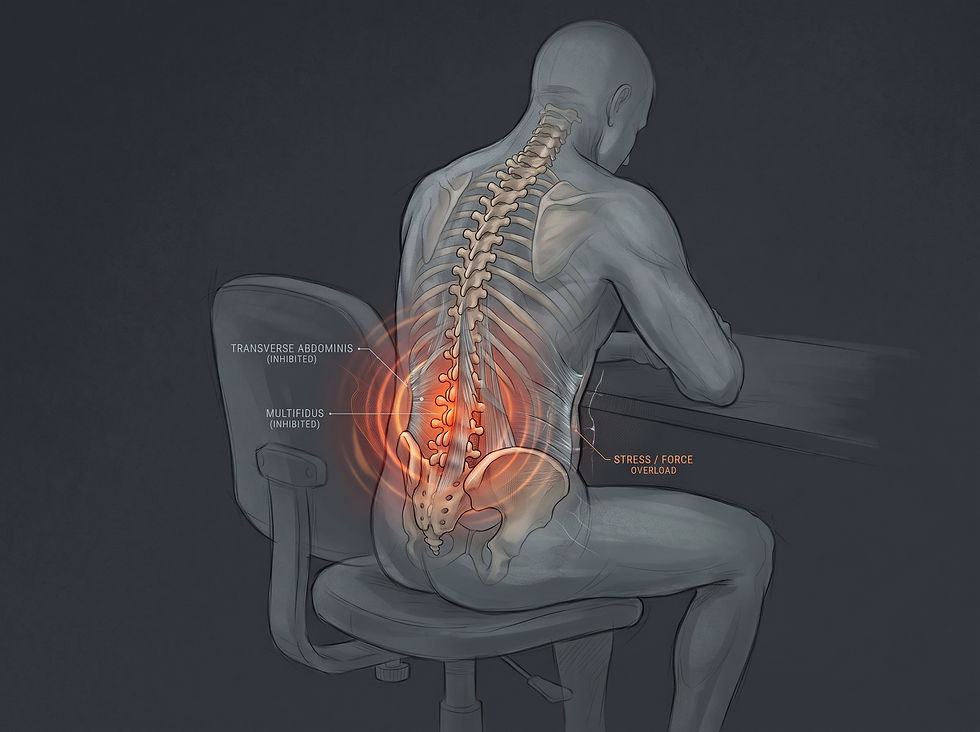
When an acute back spasm calms down, spinal tissue has begun to settle. However, deep core stabilisers—specifically the transverse abdominis and multifidus muscles—frequently remain reflexively inhibited. Returning to sitting at a desk for eight hours or lifting heavy objects without systematically retraining deep spinal stability forces your lower back to absorb forces it cannot handle. Pain returns because structural support was never rebuilt.
Shoulder Pain & Rotator Cuff Impingement

When shoulder bursitis or tendonitis improves, local inflammation drops. However, overhead reaching or typing with poor posture requires precise scapular mechanics and rotator cuff endurance. Without progressive load capacity, normal daily movements quickly re-compress sensitive subacromial structures, triggering another cycle of inflammation.
Stress-Related Upper Back, Neck & Headache Pain

Upper back tightness and tension headaches reflect autonomic nervous system overload and postural fatigue. When hands-on therapy releases tight suboccipital muscles, immediate headaches disappear. But if your daily environment involves slouched sitting, shallow breathing, and high cognitive stress, your body rapidly defaults back to sympathetic ("fight-or-flight") muscle guarding.
Why Traditional Healthcare Fails Recurrent Pain

Most conventional healthcare is engineered around acute episodic problems: you experience a symptom, visit a clinic, the acute episode is treated, and the interaction ends. While this model works for acute trauma, it stumbles when applied to chronic or recurrent pain. The phase following symptom relief is inherently awkward. You are no longer an acute patient requiring weekly manipulation, but you are not yet fully resilient against everyday physical strain. Patients are frequently handed a generic sheet of exercises with a vague instruction to "resume activity as tolerated", leaving them on their own to interpret what "as tolerated" means.
Without a structured bridge, people fall into two common traps:
The Over-Exertion Trap: Feeling good, they immediately jump back into full daily workloads or intense exercise routines, overloading tissues that lack capacity and causing a painful relapse.
The Fear-Avoidance Trap: Terrified of re-triggering pain, they excessively restrict movement, becoming increasingly guarded, stiff, and deconditioned over time.
The Modern Solution: A Hybrid Care Model

Closing the gap between being cleared and being ready requires abandoning the idea that healthcare stops at the clinic door. True recovery requires a Hybrid Care Model that blends expert clinical care with technology-enabled exercise rehabilitation.
At Health Architects SA, our hybrid model connects three vital pillars of treatment:
Hybrid Care Pillar | Clinical Focus & Setting | Primary Goal |
1. In-Person Sanctuary | Hands-on physiotherapy, cranio-sacral therapy, and joint mobilisation in our quiet Bergbron studio. | Remove pain barriers, release tissue restrictions, and calm hyper-aroused nervous system. |
2. Onsite Guided Rehab | Clinical Pilates, reformer work, and core motor control retraining in our movement space. | Retrain movement mechanics, rebuild core stability, and test load capacity under direct oversight. |
3. Remote Digital Rehab | Video exercise prescription, mobile app guidance, and remote tracking technology. | Ensure correct exercise form, progress load safely at home, and provide continuous daily support. |
Healing happens in how you move, sit, and recover every day at home and work. Through modern digital exercise platforms and mobile video guidance, we deliver personalised rehabilitation routines straight to your phone or computer. This ensures every exercise is performed with correct form and load is progressed safely week by week.
Building a Long-Term Relationship: The Continuum of Care

Moving away from episodic care means shifting from a short-term "symptom fix" mindset to a long-term Continuum of Care. Preventing pain relapse depends heavily on systemic lifestyle foundations—sleep quality, stress resilience, digestive health, and daily ergonomics. A rehabilitation plan that ignores these underlying factors operates with one hand tied behind its back.
To support our patients throughout their recovery, we created a structured continuum of care through our flexible digital membership tiers:

THRIVE- Tier 1: Built around our FLOURISH – Root-Cause Reset curriculum (80+ short video modules and downloadable guides) covering essential lifestyle foundations, including sleep architecture, stress resilience, ergonomic positioning, and recovery principles.

FLOURISH- Tier 2: (Coming soon) Adds individual accountability to the Root Cause Reset, with monthly 1-on-1 health coaching, live group Q&A sessions, and two comprehensive blood chemistry panels per year to investigate underlying systemic inflammatory or metabolic drivers.

EPIC TRIBE - Tier 3 : (Coming soon) A completely bespoke approach to the Root Cause Reset. Designed for complex conditions, offering weekly 1-on-1 coaching, quarterly functional medicine consultations, access to complex laboratory investigations, and access to our Freedom2Move streamable exercise series for chronic pain and fatigue.
By combining in-person clinical care with digital membership support, we establish an ongoing partnership. Instead of starting from scratch every time your back or neck flares up, you remain supported within a continuous health strategy.
Four Practical Steps to Close the Gap Today
If you are currently stuck in the grey zone between being cleared of acute pain and feeling truly confident in your body, here are four steps you can take today:
Redefine Your Target: Shift your goal from "being out of pain" to "building capacity and resilience". Ensure your muscles, core, and joints are strong enough for daily work and life demands.
Build a Stepped Progression: Avoid jumping straight back into full activity. Work with your practitioner to design a structured, week-by-week increase in physical loading and movement complexity.
Address Systemic Recovery Drivers: Evaluate sleep quality, daily stress levels, and ergonomic habits. If your nervous system remains in high-stress fight-or-flight mode, muscle tissue cannot properly repair.
Partner for the Long Term: Seek out a care model that supports you beyond the treatment table. Utilise digital tools, video exercise guidance, and ongoing coaching to maintain momentum and prevent future relapses.
Don't Wait for the Next Relapse
The gap between being cleared and being ready is where pain returns—but it can easily be closed with the right plan, technology, and ongoing support. If you are tired of temporary relief followed by frustrating flare-ups, we are here to help you build lasting physical resilience. If you would like more info, book a discovery call.
Health Architects SA | Bergbron Studio, Randburg📍 Address: 1348 Spieelberg Turn, Bergbron, Randburg📞 Landline: (010) 157 0128 | 📱 WhatsApp: (071) 302 3300🚨 Emergency Line: +27 72 284 4283📩 Email: jenny@healtharchitectssa.com🌐 Website: www.healtharchitectssa.com
This article is for educational and informational purposes only and does not constitute or replace individual medical advice or a formal clinical consultation. If you are experiencing acute or severe symptoms, please contact a qualified healthcare provider.


Comments