
Clinical Pilates with a Physiotherapist Changes Everything
Moving Beyond the Mat
If you have ever walked into a large group Pilates class hoping to fix a nagging back injury, only to leave feeling the same—or perhaps a little sorer—you are not alone. While general Pilates is fantastic for fitness, it is often not specific enough to heal complex injuries or correct years of poor movement habits.
This is where Clinical Pilates comes in. As a Physiotherapist and Functional Medicine Practitioner, Jenny Hague offers an approach that bridges the gap between medical treatment and exercise. It is not just about "working out"; it is a diagnostic tool designed to treat the root cause of your pain. Here is why choosing a physio-led Clinical Pilates program is one of the best investments you can make for your long-term health.
It’s a Prescription, Not a Routine

In a fitness setting, everyone in the class might perform the same movements. However, Clinical Pilates is tailored entirely to your body. Before you even touch a piece of equipment, a physical therapist conducts a comprehensive assessment to identify your specific movement dysfunctions, biomechanical imbalances, and injury history. Because a trained clinician understands pathology (the medical causes of injury), exercises are chosen specifically to treat your condition. This ensures that the movements are safe and effective, rather than a "one-size-fits-all" approach that could accidentally aggravate an injury.
We Retrain Your Brain (The "Feedforward" Secret)

You might be strong, but does your body know when to use that strength? Stability isn't just about having rock-hard abs; it is about neurological timing. In a healthy body, deep core muscles like the Transversus Abdominis should switch on milliseconds before you move your arms or legs to protect your spine. This is called "feedforward activation". When you are in pain or recovering from an injury, this mechanism often switches off or delays. Your brain literally forgets to protect your spine. Clinical Pilates uses specialized equipment and cues to retrain this timing.
Think of it this way: Imagine your spine is a tall radio tower. Your deep core muscles are the guy wires that keep it upright. If those wires are slack or react too slowly when the wind blows (movement), the tower sways dangerously. Clinical Pilates tightens those wires before the wind blows, keeping your structure secure. - Jenny Hague - Physiotherapist & Functional Medicine Practitioner
Breaking the Pain Cycle

Many people are afraid to move because it hurts. This is known as Kinesiophobia (fear of movement), and it can actually make pain worse by causing stiffness and weakness. Clinical Pilates provides a safe, controlled environment where you can move without pain. By supporting your body with equipment like the Reformer or Trapeze Table, we can take the weight off your joints and allow you to strengthen muscles without compressing painful areas. This helps break the cycle of pain and builds confidence in your body's ability to heal.
The Link Between Poor Posture, and chronic back pain.
Specialised Rehabilitation
Clinical Pilates is highly effective for specific medical conditions that require precise management:
Condition | Description |
Back and Neck Pain | It is proven to reduce pain and disability in chronic low back pain cases more effectively than minimal intervention. It also improves deep neck muscle endurance, which is vital for headaches and posture. |
Pre and Post-Natal Care | It is a safe way to exercise during pregnancy, helping to reduce pelvic and back pain. Postpartum, it targets the pelvic floor and helps close abdominal separation (diastasis recti). |
Surgical Recovery | If you have had a hip or knee replacement, Clinical Pilates can help restore range of motion and balance safely. |
Neurological Conditions | It has been shown to improve balance and walking speed in conditions like Multiple Sclerosis. |
A Whole-Person Approach
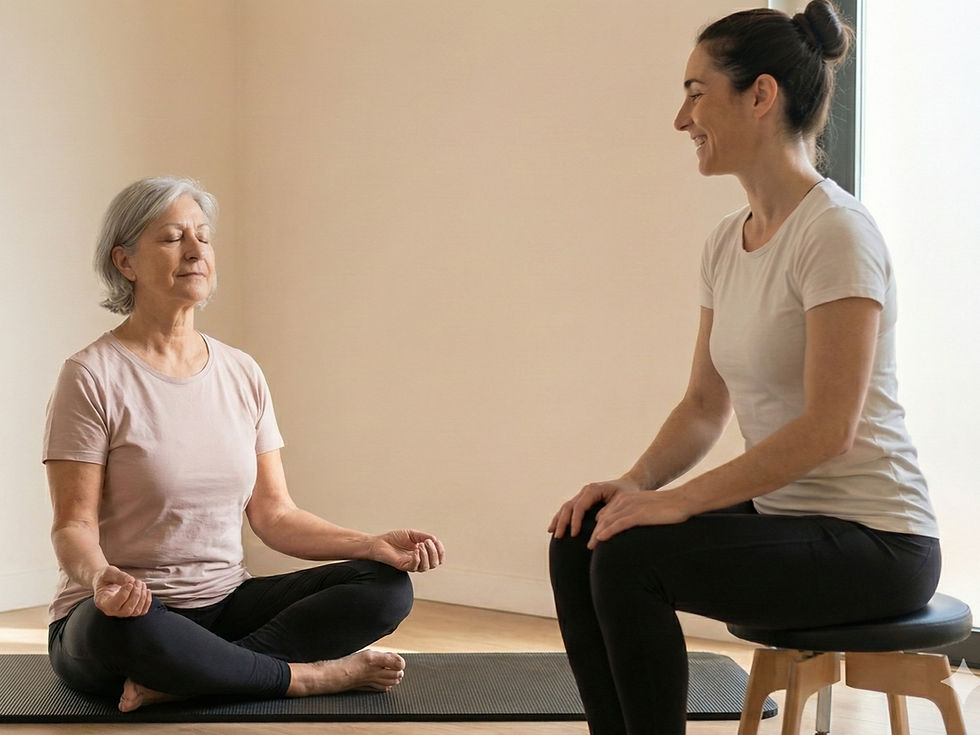
As a Functional Medicine Practitioner, Jenny Hague looks at the "whole person," not just the injury. Clinical Pilates aligns perfectly with this philosophy. It integrates breath, control, and mindfulness, helping to calm the nervous system while strengthening the body. It addresses the physical "roots" of the problem—posture, alignment, and muscle balance—rather than just treating the "branch" (the symptom).
Summary

Ready to restore your stability?
Working with a qualified physiotherapist ensures that your Pilates practice is safe, medically sound, and laser-focused on your recovery goals. Whether you are rehabilitating an injury, preparing for surgery, or simply want to build a resilient body that moves without pain, Clinical Pilates offers a pathway to long-term wellness.
References.
• Creamer, D. (2025). Motor Control & Dynamic Joint Stability: A Pilates Perspective. (Discussing Panjabi’s Stability Model and the Local Muscle System).
• Lee, K. (2025). Effects of Core Stability Training on Deep Stabilizing Muscle Function and Neuromuscular Control. (Demonstrating reduced contraction timing/improved feedforward control of the Transversus Abdominis).
• Physio-Wise. 8 Principles of Pilates Techniques..
Yamato, T.P., et al. (2016). Pilates for Low Back Pain: Complete Republication of a Cochrane Review. (Finding Pilates more effective than minimal intervention for pain and disability).
• Picak, G.S., & Yesilyaprak, S.S. (2022). Effects of clinical pilates exercises in patients with chronic nonspecific neck pain. (Showing improvements in pain, disability, and posture).
• Ulug, N., et al. (2018). Effects of Pilates and yoga in patients with chronic neck pain: A sonographic study. (Noting increases in deep neck muscle thickness)
Justice, C., et al. (2023). Guiding Principles for the Practice of Integrative Physical Therapy. (Discussing the interconnectedness of biological, behavioral, and environmental factors in health).


Comments